What actually happened on the night, group by group.
These aren't testimonial snippets pulled out of context. Each one covers the group, the room, what they were raising for and what they walked away with. Numbers come straight from our partners. Where we don't have a figure, we say so rather than round something up.
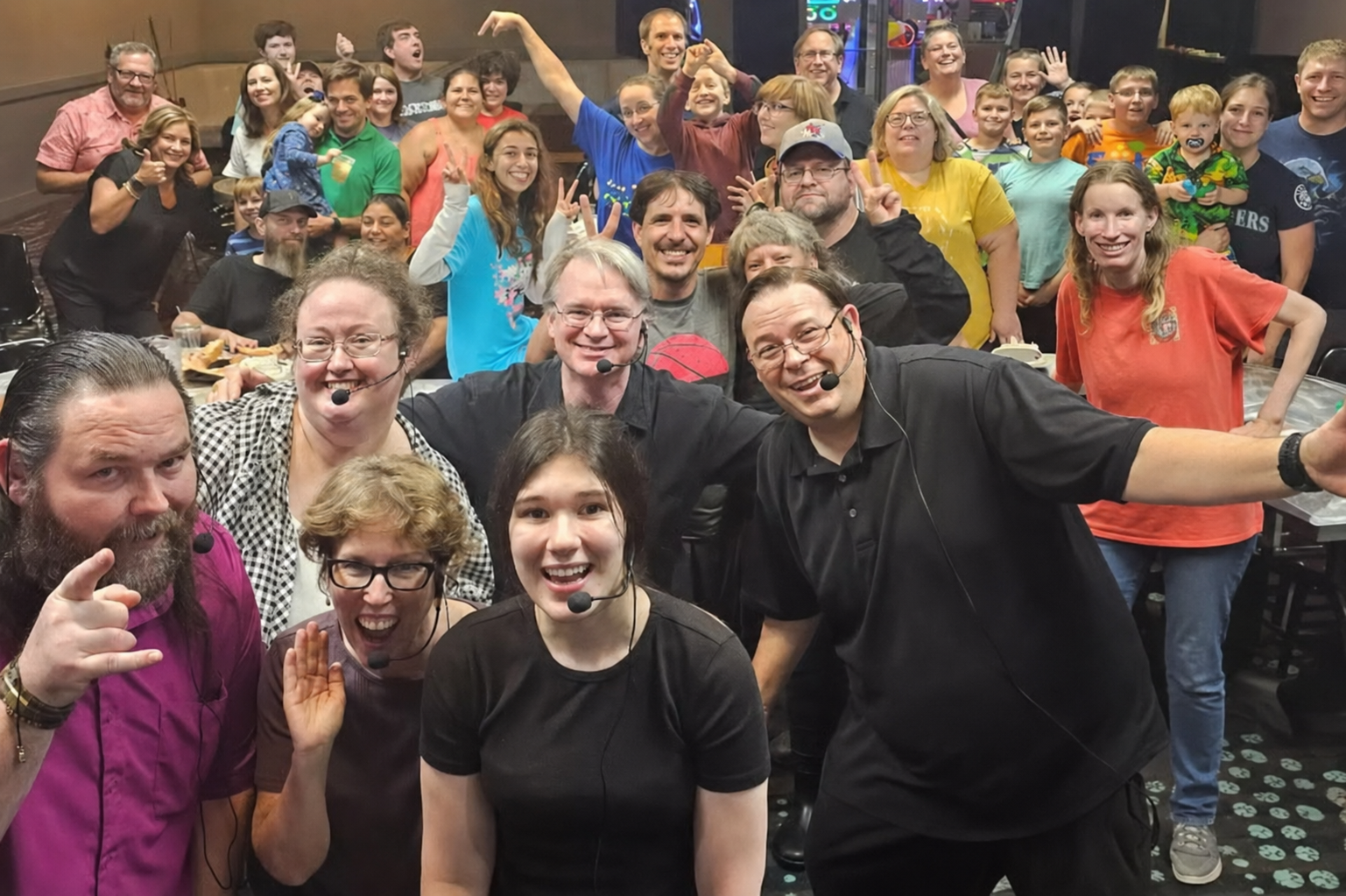
An 80-member church raised over $11,000 in one night
Eighty members. That's the whole congregation, not the committee. On paper that's a small room and a small night, and it's exactly the situation where most groups talk themselves out of trying anything ambitious.
They were raising for Habitat for Humanity, so the cause reached well past their own membership. That's the lever a comedy night pulls: people will bring a neighbor to a funny evening who would never come to a fundraising appeal. The room filled with people who weren't on the church roll.
They cleared over $11,000. From eighty members. Under our fee structure, the most we could have taken from that night was $1,000, which means the overwhelming majority of it went to Habitat.
"We raised over $11,000 for Habitat for Humanity from our small church of 80 members! They are excellent to work with."Nancy Cable · Emmanuel Presbyterian Church
Small congregation doesn't mean small night. What matters is how far outside your membership the cause travels, and whether the event is something people want to attend on its own.
A school fundraiser where the kids ran the room
School fundraisers usually fail in the same place: one exhausted parent volunteer holding the entire thing together while everyone else says they'll help closer to the date. The organizer's first worry is almost never the money. It's whether she can survive the process.
So the part of this one worth studying isn't the total. It's that the students became participants instead of spectators. Our shows pull volunteers out of the audience, and when the volunteers are kids the parents in the room stop being an audience and start being invested. That's the moment the auction stops feeling like an ask.
The organizer's account of it was about being walked through the steps rather than handed a checklist and wished luck. It's the difference between a fundraiser that gets repeated and one that quietly never happens again.
"They walked me through every step with patience and grace. We all loved how the kids really got into it."Dawn Lydick · Bethesda Christian School
If the students are on stage, the parents aren't going anywhere. Participation is what makes a school crowd spend, and it's the thing a raffle table can never manufacture.
What the winning nights have in common
Across every group we've worked with, the same four things separate a $2,000 night from an $11,000 one. None of them are about the show itself.
Groups that start selling six weeks out fill the room. Groups that start two weeks out spend the night looking at empty chairs.
Emmanuel raised for Habitat, not for Emmanuel. People invite friends to a cause their friends also care about.
Three local businesses at a few hundred each covers your costs before a single ticket sells. Most groups forget to ask.
Five or six good items beats twenty mediocre ones. A warm room will bid hard on things it can picture using.
We are writing these up as groups send us their numbers
If you have run a night with us and you are willing to share what you raised, we would like to build a case study around it. It helps the next group in your position decide, and we'll send you the finished page to approve before anything goes live.
Want a night like these?
Tell us your group and your room. We'll give you a realistic range based on what comparable groups actually raised, not a best-case number designed to get you excited.
The nights behind the numbers
Footage from real fundraisers. Same shows, same auctioneer, different rooms across four states.
Clean comedy fundraisers that raise $5,000+ in a single night, with a 50% profit minimum, guaranteed.
(817) 609-1715